
Commercial ovens are among the most heavily used pieces of equipment in any kitchen. A convection oven in a busy restaurant may complete dozens of cycles per day, and a combi oven in a hotel kitchen can run continuously for extended service periods. The combination of heat, moisture, vibration, and constant cycling creates conditions where components gradually wear and eventually fail.
Understanding the common fault categories — and how technicians approach diagnosing them — is useful for kitchen operators. It helps set realistic expectations about what a diagnostic visit involves and why certain repairs are sometimes preceded by testing that may not be immediately visible to the operator.
The Diagnostic Approach
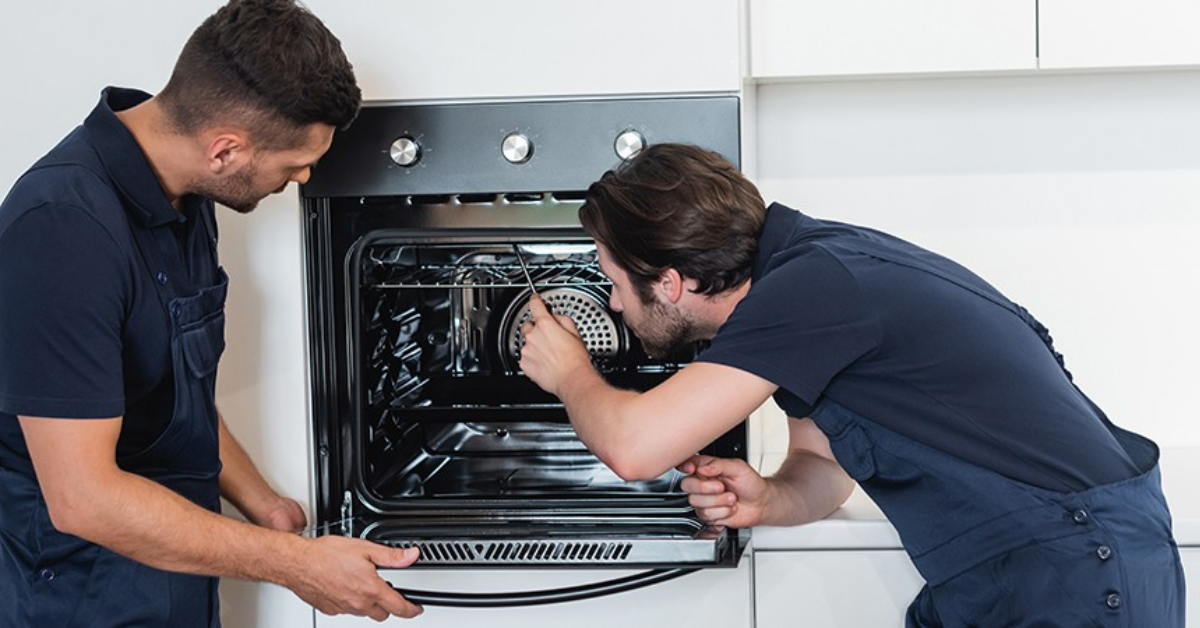
Before discussing specific fault types, it's worth explaining how technicians generally approach oven diagnostics. The goal is to identify the root cause of the reported issue, not just address the visible symptom. This distinction matters because some symptoms — inconsistent baking results, for example — can be caused by several different underlying faults. Replacing a thermostat when the actual cause is a door seal failure addresses the wrong problem and leaves the original issue unresolved.
A structured diagnostic typically begins with a conversation about what the operator has observed: when the fault started, whether it is consistent or intermittent, whether any error codes have been displayed, and whether there have been any recent changes to operating patterns. This context helps focus the assessment.
The technician then conducts a visual inspection of accessible components, followed by operational testing — running the oven through normal operating cycles while measuring temperature, observing ignition (in gas units), and checking for error codes or abnormal behavior. Specific component testing follows based on what the initial assessment suggests.
Thermostat and Temperature Calibration Faults
Temperature-related issues are among the most common complaints with commercial ovens. The operator notices that products are not baking correctly — either consistently undercooked, overcooked, or unevenly done — despite the oven appearing to operate normally. Error codes may or may not be present.
The first step is to verify actual oven temperature against the setpoint using a calibrated independent thermometer. This quickly distinguishes between a calibration issue (the thermostat is accurately reporting a temperature, but the temperature it's targeting is wrong) and a temperature-holding issue (the oven cannot maintain the setpoint regardless of what it is set to).
Thermostat calibration drift is a gradual process. Most commercial oven thermostats are designed to be field-calibrated, and periodic recalibration is a normal maintenance activity. However, if a thermostat has drifted significantly or is reporting erratic temperatures, replacement may be more appropriate than continued calibration attempts.
In ovens with electronic control boards, temperature-related faults may originate at the sensor (temperature probe) or at the board itself. These are tested separately to isolate the fault location before any components are replaced.
Ignition System Issues in Gas Ovens
Gas ovens fail to light or fail to maintain ignition for a set of identifiable reasons. The ignition sequence in a commercial gas oven involves a series of steps: the igniter energizes, a trial-for-ignition period begins, the gas valve opens, and the flame must be proven before normal operation continues. A fault at any point in this sequence can result in a no-ignition condition.
Common causes include a failed or degraded igniter (these have finite service lives and glow igniters in particular are known to weaken over time without visually obvious signs of failure), a faulty flame sensor that is not confirming ignition even when the flame is present, a gas valve that is not opening correctly, or an issue with the control board that is managing the ignition sequence.
Diagnosing ignition faults requires testing each component in the sequence. A technician will typically check the igniter's resistance and current draw, test the flame sensor signal, verify that the gas valve is receiving the correct voltage signal at the appropriate moment in the cycle, and review any fault codes stored in the control board if applicable.
It is worth noting that gas appliance work must be performed by certified technicians under applicable Canadian regulations. This is not an area where field experimentation is appropriate.
Heating Element Failures in Electric Ovens
Electric commercial ovens use heating elements — typically nichrome wire elements enclosed in a metal sheath — for both upper and lower heat. These elements fail through a combination of thermal cycling fatigue, moisture exposure (particularly in combi applications), and physical damage.
A failed element produces a characteristic set of symptoms: the oven may not reach setpoint temperature, may heat unevenly (if only one element is affected in a dual-element configuration), or may display specific fault codes. In some cases, a partially failed element will still carry current but at reduced output, making the fault less immediately obvious.
Element testing involves measuring resistance with a multimeter. A properly functioning element will read a specific resistance value; a failed element will read either very high resistance (open circuit) or zero (short to ground). This is a straightforward test that quickly confirms or rules out element failure.
In combi ovens, heating elements are additionally subject to steam exposure, which accelerates corrosion. Combi oven elements typically require replacement more frequently than those in dry convection units.
Fan Motor Issues
Convection ovens — including combi units — rely on fans to circulate heat evenly throughout the cavity. Fan motor issues can cause uneven cooking results that are sometimes mistakenly attributed to thermostat problems.
Signs of fan motor problems include audible changes (bearings wearing out typically produce a distinctive sound), visible imbalance in fan blade rotation, or temperature uniformity measurements that show significant variation across the oven cavity despite correct thermostat function. In combi ovens, the fan also serves to circulate steam, so motor issues can affect steam cooking performance independently of temperature control.
Diagnosis involves listening to and observing the fan operation, checking motor current draw, and in some cases checking fan blade balance. A failing bearing will often produce increased current draw as the motor works harder to overcome friction.
Door Seal and Gasket Problems
The door seal (gasket) serves to contain heat within the oven cavity. A degraded seal allows heat to escape, which forces the oven to run longer cycles to maintain temperature and creates uneven heat distribution near the door. In combi ovens, a failed door seal also allows steam to escape, reducing the effectiveness of steam cooking modes.
Door seal issues are sometimes overlooked because they don't produce a specific error code and the oven may still reach temperature eventually. However, a simple inspection of the gasket condition and a door close test (observing whether heat can be felt escaping around the door edges) will identify seal problems that contribute to performance complaints.
Gasket replacement is one of the more straightforward oven repairs. Gaskets are consumable components with a finite service life, and their replacement is a normal part of oven maintenance programs.
Control Board and Electronic Faults
Modern commercial ovens rely on electronic control boards for temperature regulation, ignition management, cycle control, and fault monitoring. Control board failures are less common than component failures (thermostats, igniters, elements) but are more complex when they do occur because the symptoms can mimic failures in the components the board controls.
Before a control board is replaced, a competent technician will first confirm that the components the board is controlling are themselves functioning correctly. A board that is receiving incorrect signals from a faulty temperature probe may produce symptoms that look like board failure when the actual cause is the sensor. Thorough component testing before board replacement avoids unnecessary expense.
When a board failure is confirmed, it typically requires a model-specific replacement part. Lead times for control boards can vary depending on equipment age and manufacturer availability, which is a practical consideration in service planning.
Steam System Issues in Combi Ovens
Combi ovens add a layer of complexity not present in standard convection units: the steam generation and injection system. This system includes a water supply connection, a boiler or steam injector, a drain system, and associated sensors and controls. Scale buildup from mineral-heavy water supplies is a chronic issue in combi ovens and is the single most common source of steam-related problems.
Scale deposits in the boiler or on steam injectors reduce efficiency and can eventually cause failures. Many combi oven manufacturers include descaling alerts in their control systems, and manual descaling is a routine maintenance task in hard-water areas. If descaling is neglected, the resulting scale buildup can damage the boiler or heating elements, turning a routine maintenance item into a repair.
Water quality matters significantly for combi ovens. If your water supply has very high mineral content, a water treatment or filtration solution upstream of the oven may be appropriate to discuss with your service technician.
What to Tell Your Technician
The more specific the information you can provide about a fault, the more efficiently a diagnostic assessment can be conducted. Useful information includes: when the fault was first noticed, whether it occurs on every cycle or intermittently, whether it is worse after the oven has been running for a period, whether any error codes have been displayed (and if so, what they were), and whether any changes occurred around the time the fault started (such as a power outage, a cleaning procedure, or a change in the cooking load).
Photographs of error codes, if displayed, are useful to have ready. For intermittent faults in particular, any pattern you've noticed about when the fault occurs is valuable context that helps focus the diagnostic process.
Oven Repair and Maintenance from Fimoria
Our technicians service commercial convection, combi, and deck ovens. Learn about our oven repair service or arrange a diagnostic assessment.